
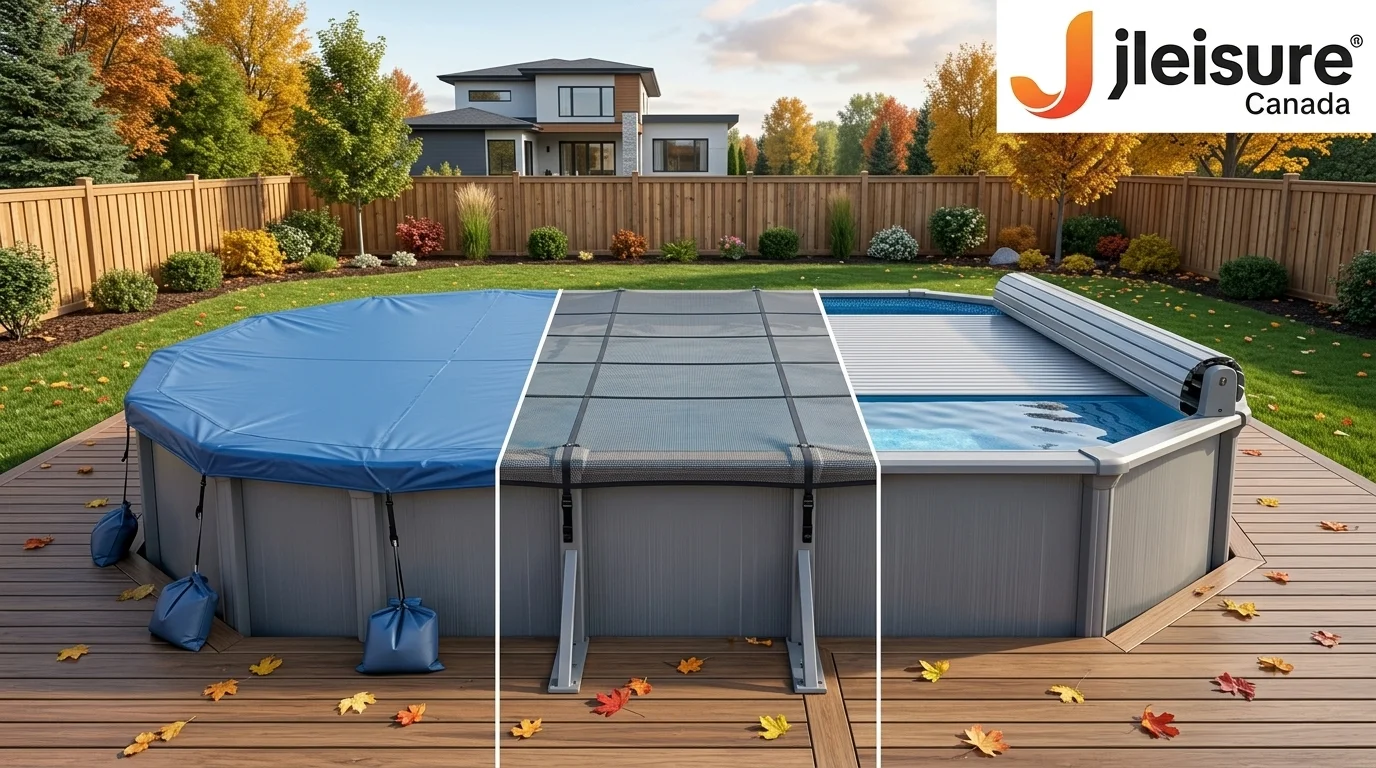
A pool cover in Canada has to do more than keep leaves out. It’s holding back snow load, blocking ice damage, and cutting heat loss during the shoulder months when you’re still trying to squeeze in a swim.
Pick the wrong one and you’re either fishing a torn tarp out of the water in April or paying to heat a pool that’s leaking warmth overnight. Here’s how the main pool cover types stack up, and how to pick the right one for your setup.
Pool Cover Types Explained
Not every cover does the same job some are built for swim season, others for surviving a Canadian winter untouched for months.
| Cover Type | Main Job | Season |
|---|---|---|
| Solar cover | Heat retention, reduces evaporation | Spring–fall swim season |
| Solid winter cover | Blocks all light and debris | Off-season closing |
| Mesh/leaf net cover | Drains rain and snowmelt, blocks debris | Off-season closing |
| Safety cover | Rated to hold weight, prevents accidental entry | Year-round if kids/pets are around |
| Cable and winch cover | Secures tightly against wind | Winter, high-exposure yards |
Solid vs Mesh Pool Cover: Which Wins in Canada?
This is the one decision most owners get stuck on, so here’s the honest breakdown.
- Solid (polyethylene/woven) covers block 100% of sunlight, which limits algae growth over winter, but they pool standing water on top and need a cover pump
- Mesh covers let rain and snowmelt drain straight through, so no standing water to manage, but they let in some light and fine debris
- Maintenance trade-off: solid covers mean more spring cleanup from settled debris in trapped water; mesh means less water weight stress on the cover itself
- Our take: if you’re closing the pool and won’t be checking on it often, mesh is more forgiving; if you want maximum light-blocking for algae control, go solid
Above Ground Pool Cover Sizing Guide
Getting the size wrong is the most common (and priciest) mistake. Match your cover to both pool shape and diameter, with a few inches of overlap.
| Pool Shape | Common Sizes | Overlap Needed |
|---|---|---|
| Round | 12ft, 15ft, 18ft, 21ft, 24ft | 2–3 ft beyond pool edge |
| Oval | 12x24ft, 15x30ft, 18x33ft | 2–3 ft beyond pool edge |
| Rectangular | Custom-measured | 2–4 ft beyond pool edge, corners reinforced |
Always measure the actual pool diameter or dimensions not the box the pool came in since liners and frames can shift sizing slightly.
Do Pool Covers Help With Heat Retention?
Yes, and it’s one of the most underrated reasons to use one. A solar cover traps daytime heat and slows evaporation, which is where most heat loss happens overnight. In a Canadian shoulder season, that can mean the difference between a swimmable pool in early June and waiting until July.
How to Winterize a Pool Cover in Canada?
- Balance and shock the water before closing so it’s stable under the cover for months
- Lower water level a few inches below skimmer level for above ground pools
- Add an air pillow under solid covers to absorb ice expansion pressure
- Secure with cable and winch or water bags so wind and snow load don’t shift it
- Check periodically through winter for standing water or snow buildup that needs clearing
Best Pool Covers for Canadian Weather: Quick Picks
| Situation | Best Cover Choice |
|---|---|
| Cold winters with heavy snow | Solid, reinforced winter cover with cable and winch |
| Rainy falls, less snow | Mesh/leaf net cover for easy drainage |
| Want warmer water in shoulder season | Solar cover |
| Kids or pets near the pool | Rated safety cover |
| Budget-conscious, standard above ground pool | Polyethylene solid cover, properly sized |
JLeisure’s above ground pool lineup is built around standard round and oval sizing, which makes matching a properly fitted cover more straightforward than hunting down a custom shape.
FAQs
Here are some frequently asked questions given below:
| Question | Answer |
|---|---|
| What’s the difference between solid and mesh pool covers? | Solid covers block all light but trap water on top; mesh drains water but lets in some light and debris. |
| How do I size an above ground pool cover? | Measure your actual pool diameter or dimensions and add 2–3 feet of overlap on all sides. |
| Do pool covers really help with heat retention? | Yes a solar cover reduces evaporation and heat loss, which is the main way pools lose warmth overnight. |
| How do I winterize a pool cover in Canada? | Balance the water, lower the level, add an air pillow, and secure the cover tightly before freeze-up. |
| Is a safety cover worth it? | If kids or pets have pool access, yes it’s rated to hold weight and prevents accidental entry. |
| Where can I buy a pool cover in Canada? | Check sizing against your pool’s actual dimensions first, then buy through a retailer that lists exact fit specs. |
Conclusion
The right pool cover for Canadian weather comes down to matching the material to what your winters actually do heavy snow calls for a reinforced solid cover, rainy falls favour mesh, and anyone chasing a longer swim season should add a solar cover to the rotation. Measure your pool properly before buying, follow the winterizing steps above, and you’ll open in spring to clean water instead of a cleanup project.


